Ayaan Hirsi Ali Stuns University Audience With Blunt Warning About Islamism and Western Freedom
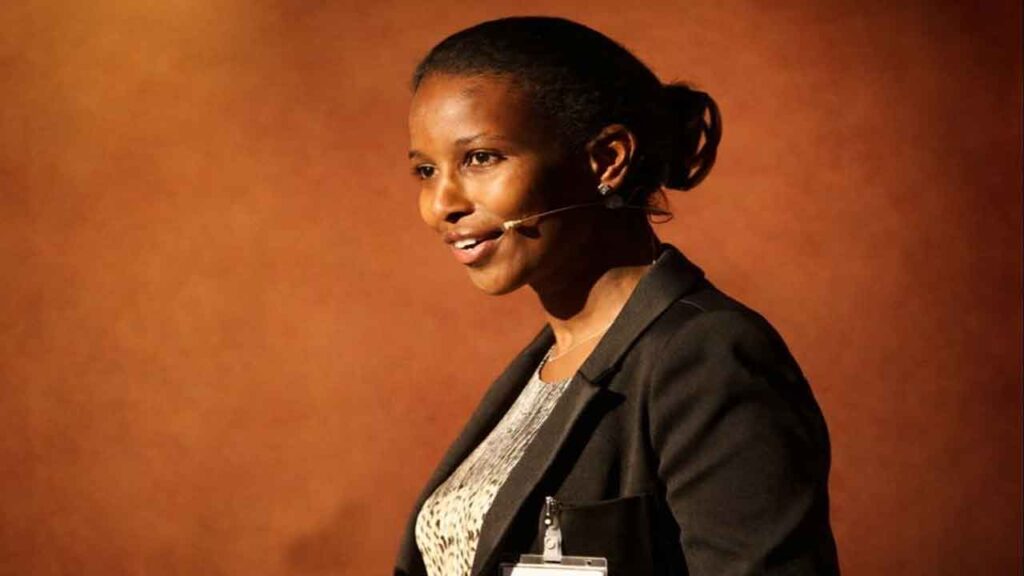
Ayaan Hirsi Ali Stuns University Audience With Blunt Warning About Islamism
Ayaan Hirsi Ali Stuns University Audience With Blunt Warning About Islamism and Western Freedom
A Campus Question That Sparked a Firestorm
A tense exchange at the University of Austin has reignited a long-running and deeply polarizing debate in Western societies: how to reconcile freedom of speech, freedom of religion, and pluralism with the reality of violent ideological movements that openly reject those same principles. The moment, now circulating widely online, centers on a student’s question about Islamophobia, antisemitism, and historical injustice—and the uncompromising response delivered by one of the most controversial public intellectuals of our time, Ayaan Hirsi Ali.
Ayaan Hirsi Ali Stuns University Audience With Blunt Warning About Islamism and Western Freedom
The Student’s Challenge: Are All Hatreds the Same?
The student began by drawing parallels between antisemitism, white supremacy, and what is commonly labeled Islamophobia. He referenced historical atrocities—including slavery, the genocide of Native Americans, and reports of Muslims being persecuted in China—and questioned why antisemitism is treated as categorically different from other forms of prejudice.
His framing reflected a worldview increasingly common on college campuses: that all forms of hatred are morally equivalent and should be addressed through the same ideological lens. The implication was that distinguishing between them risks excusing past Western crimes while ignoring present injustices elsewhere.
Hirsi Ali’s First Rebuttal: The West Reckoned With Its Past
Hirsi Ali rejected that premise outright. She argued that Western societies, particularly the United States and Western Europe, have already undergone painful and sustained reckonings with their historical injustices. Slavery was confronted through war. Segregation was dismantled through civil rights struggles. Women’s rights were expanded through decades of social and legal reform.
She emphasized that many of the leaders of these movements were deeply religious individuals—often Christians—who cited scripture and moral conviction as motivation for expanding freedom, not restricting it. In her view, the West’s defining trait is not moral purity, but its capacity for self-criticism and reform.
Why Antisemitism Is Different, Historically
Hirsi Ali then addressed antisemitism directly, describing it as the oldest and most persistent form of organized hatred in human history. Unlike other prejudices tied to specific regions or eras, antisemitism appears across cultures, continents, and centuries, ultimately culminating in the Holocaust.
What made the post-World War II West different, she argued, was its willingness to confront that horror honestly—acknowledging responsibility, reshaping laws, and building institutions designed to prevent such atrocities from happening again.
“Islamophobia” and the Question of Political Weaponization
One of Hirsi Ali’s most controversial claims was her assertion that “Islamophobia” is a manufactured term used to suppress criticism of Islamism rather than protect individuals from discrimination. According to her argument, the concept is exploited to shield an ideology from scrutiny by framing all criticism as racism or bigotry.
She drew a sharp distinction between Muslims as individuals—who deserve full civil rights—and Islamism as a political and religious ideology that seeks dominance rather than coexistence. In her view, conflating the two shuts down necessary debate.
Can There Be Compromise With Violent Ideology?
The most arresting moment of the exchange came when Hirsi Ali posed a blunt question to the audience: what compromise is possible when one side explicitly endorses violence against those who refuse to submit or convert?
Drawing on examples from parts of Africa, the Middle East, and South Asia, she described forced conversions, religious persecution, and systemic oppression of women as present-day realities—not theoretical risks. For her, tolerance without limits becomes self-destructive when it ignores openly stated threats.
Peacemaking, Scapegoating, and the Fear of Overreach
A second student attempted to redirect the discussion toward peacemaking, invoking Christian teachings and warning against replacing antisemitism with anti-Islamic sentiment. Hirsi Ali responded by reiterating the need to distinguish between people and ideology, cautioning against moral paralysis in the face of genuine threats.
She compared the current challenge to the Cold War, when Western democracies confronted communism—not just as a rival state system, but as a global ideology that used both violence and internal subversion to expand.
“The Constitution Is Not a Suicide Pact”
Referencing post-9/11 debates, Hirsi Ali invoked the idea that constitutional protections exist to preserve a society—not to ensure its destruction. Her argument was not for authoritarianism, but for realism: democracies must recognize threats honestly and respond within the rule of law.
She emphasized that past ideological threats were confronted through a combination of intelligence, legal enforcement, and cultural resilience—always with due process, but never with denial.
A Debate That Left No One Comfortable
The exchange visibly unsettled much of the audience, and that discomfort may explain why the video has spread so widely. Critics argue Hirsi Ali’s rhetoric risks fueling fear and division. Supporters counter that her warnings are rooted in lived experience and historical precedent.
What is clear is that the discussion exposed unresolved questions facing Western societies:
How far should tolerance extend?
Can liberal democracies defend themselves without betraying their principles?
And should universities be places where such questions are confronted—or avoided?
Why This Conversation Isn’t Going Away
Whether one agrees with Hirsi Ali or not, her appearance forced an unscripted confrontation with ideas many institutions prefer to sidestep. In an era defined by censorship concerns, cultural fragmentation, and rising global instability, that confrontation may be unavoidable.
The debate at the University of Austin did not resolve these questions—but it made one thing clear: ignoring them may be the most dangerous option of all.
NOTE: The following article reports on and analyzes a public exchange involving controversial viewpoints on religion, ideology, and national security. The perspectives presented reflect the statements of the speakers quoted and do not necessarily represent the views of this publication. We encourage readers to engage critically, respectfully, and thoughtfully with the material.
February 4th. Work Ready Okmulgee’s Remote-Work Job Fair
1 reason why Walz and Frey Under Fire as Minneapolis Emails Reveal ICE Tracking Efforts
About The Author